Product Description
__________________________________________________________________________________________________
XIamen Yingxinfeng Import&Export LTD- distributor of ZheJiang Junwell, Germany aventics, Korea SKP,KOREA YPC, Japan TAKMAN, ZheJiang Fontal, ZheJiang CHUYA, ZheJiang Villefort ,Germany DEKEMA, Korea SPG, Japan KOMATSU, ZheJiang HYDROMAX, italy Ronzio,ZheJiang Tai-Huei, ZheJiang KCL, Korea F.TEC, ZheJiang HINAKA, Japan KOGANEI, Germany HYDAC, USA EATON-VICKERS, Taiwn FURNna, ZheJiang ANSON, Japan FUJISEIKI, ZheJiang MINDMAN, UK Norgren, Japan SUMITOMO, Italy TOGNELLA ,USA Deschner kinechek, Germany BURKERT, USA Danfoss, Japan AZBIL, Japan TOYOOKI, Japan TOYOKEIKI, Japan KOGANEI, Japan SHIMADZU, USA Fairchild, USA Numatics, Italy ATOS, ZheJiang YEOSHE, Japan TOKIMEC, German REXROTH, Japan Nihon Seiki, Japan NOK/ NEW-ERA, USA asco , USA Humphrey, Italy CAMOZZI, ZheJiang CHELIC, AIRTAC, Japan SMC, ZheJiang PINXUN, German FESTO, Japan KOGANEI, Japan YUKEN, Japan Daikin, Japan Tokimec, Japan NACHI, hydraulics and pneumatics.
We work with all series of Brands with country from Japan, Italy, Germany, US, China, etc. Industrial products we sell include hydraulic pumps series, valve series, oil cylinder, pneumatic valves cylinder switches, and buffer components, filters, etc. Generally if you have got the model name and manufacturer info, we could give you our offer.
About Us
We produce various types of hydraulic pump equipment. Our products have been tested by the quality inspection department layer by layer, and only 100% qualified products are sold. Our products are widely sold all over the world.OEM/ODM Hydraulic Products Cater Your Need
We can also customize the production of hydraulic pumps, valves, oil cylinders and other products according to customer drawings. If you cannot provide drawings, our professional team can also provide you with design services according to your parameters and actual assembly needs. In addition, we can fulfill your needs of CE , ROHS or any other certification request, backed by our experienced technical team, we have confidence to pass the certificate in 1 time for your specificed products.
From raw material procurement to assembly inspection, the proportion of our product outsourcing procurement takes merely 30%, which reduces costs and helps improves our quality control. This one-stop supply service ensures the timeliness of our product delivery and reliability.
We provide a variety of foreign trade methods, such as EXW, FOB, CIF, CFR, and even DDU, DDP, etc. Backed by a powerful logistics integration system, we support sea, air, and traditional international express such as TNT, UPS, FEDEX, DHL, EMS, etc.
| Application: | Motor |
|---|---|
| Hardness: | Soft Tooth Surface |
| Installation: | 90 Degree |
| Layout: | Shunting |
| Gear Shape: | Conical – Cylindrical Gear |
| Step: | Stepless |
| Samples: |
US$ 1000/Piece
1 Piece(Min.Order) | |
|---|
| Customization: |
Available
| Customized Request |
|---|
Function of Gear Reducers in Mechanical Systems
A gear reducer
What factors should be considered when selecting the right gear reducer?
Choosing the appropriate gear reducer in
How do gear reducers contribute to energy efficiency in machinery and equipment?
Gear reducers play a significant role in enhancing energy efficiency in various machinery and equipment. Here’s how they contribute:
1. Speed Reduction: Gear reducers are commonly used to reduce the speed of the input shaft, allowing the motor to operate at a higher speed where it’s most efficient. This speed reduction helps match the motor’s optimal operating range, reducing energy consumption.
2. Torque Increase: Gear reducers can increase torque output while decreasing speed, enabling machinery to handle higher loads without the need for a larger, more energy-intensive motor.
3. Matching Load Requirements: By adjusting gear ratios, gear reducers ensure that the machinery’s output speed and torque match the load requirements. This prevents the motor from operating at unnecessary high speeds, saving energy.
4. Variable Speed Applications: In applications requiring variable speeds, gear reducers allow for efficient speed control without the need for continuous motor adjustments, improving energy usage.
5. Efficient Power Transmission: Gear reducers efficiently transmit power from the motor to the load, minimizing energy losses due to friction and inefficiencies.
6. Motor Downsizing: Gear reducers enable the use of smaller, more energy-efficient motors by converting their higher speed, lower torque output into the lower speed, higher torque needed for the application.
7. Decoupling Motor and Load Speeds: In cases where the motor and load speeds are inherently different, gear reducers ensure the motor operates at its most efficient speed while still delivering the required output to the load.
8. Overcoming Inertia: Gear reducers help overcome the inertia of heavy loads, making it easier for motors to start and stop, reducing energy consumption during frequent operation.
9. Precise Control: Gear reducers provide precise control over speed and torque, optimizing the energy consumption of machinery in processes that require accurate adjustments.
10. Regenerative Braking: In some applications, gear reducers can be used to capture and convert kinetic energy back into electrical energy during braking or deceleration, improving overall energy efficiency.
By efficiently managing speed, torque, and power transmission, gear reducers contribute to energy-efficient operation, reducing energy consumption, and minimizing the environmental impact of machinery and equipment.
volves considering several crucial factors to ensure optimal performance and efficiency for your specific application:
- 1. Torque and Power Requirements: Determine the amount of torque and power your machinery needs for its operation.
- 2. Speed Ratio: Calculate the required speed reduction or increase to match the input and output speeds.
- 3. Gear Type: Select the appropriate gear type (helical, bevel, worm, planetary, etc.) based on your application’s torque, precision, and efficiency requirements.
- 4. Mounting Options: Consider the available space and the mounting configuration that suits your machinery.
- 5. Environmental Conditions: Evaluate factors such as temperature, humidity, dust, and corrosive elements that may impact the gear reducer’s performance.
- 6. Efficiency: Assess the gear reducer’s efficiency to minimize power losses and improve overall system performance.
- 7. Backlash: Consider the acceptable level of backlash or play between gear teeth, which can affect precision.
- 8. Maintenance Requirements: Determine the maintenance intervals and procedures necessary for reliable operation.
- 9. Noise and Vibration: Evaluate noise and vibration levels to ensure they meet your machinery’s requirements.
- 10. Cost: Compare the initial cost and long-term value of different gear reducer options.
By carefully assessing these factors and consulting with gear reducer manufacturers, engineers and industry professionals can make informed decisions to select the right gear reducer for their specific application, optimizing performance, longevity, and cost-effectiveness.
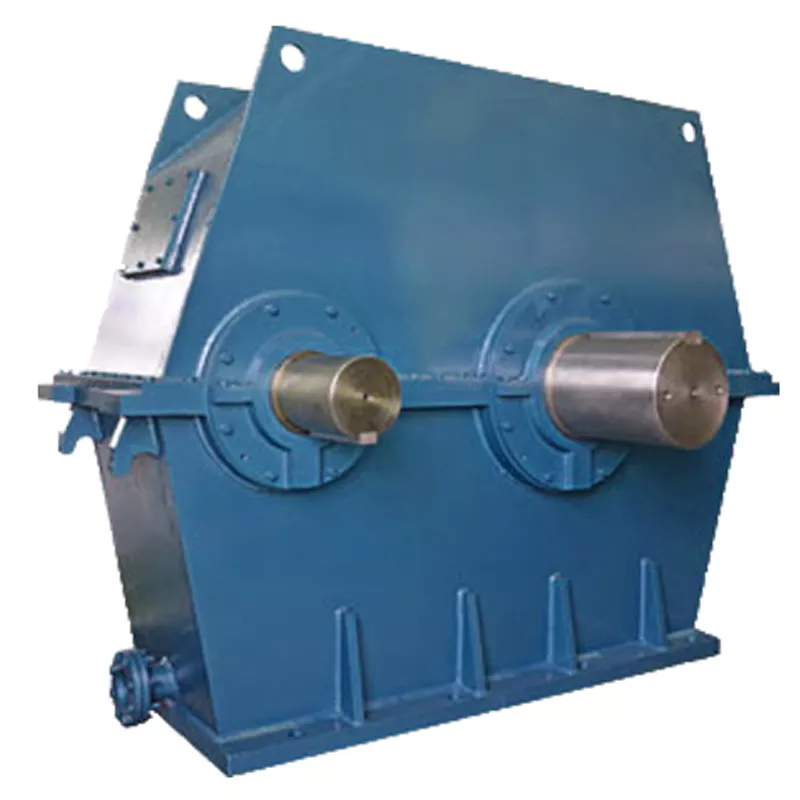
, also known as a gear reduction unit or gearbox, is a mechanical device designed to reduce the speed of an input shaft while increasing its torque output. It accomplishes this through the use of a set of interlocking gears with different sizes.
The primary function of a gear reducer in mechanical systems is to:
- Speed Reduction: The gear reducer takes the high-speed rotation of the input shaft and transmits it to the output shaft through a set of gears. The gears are configured in such a way that the output gear has a larger diameter than the input gear. As a result, the output shaft rotates at a lower speed than the input shaft, but with increased torque.
- Torque Increase: Due to the size difference between the input and output gears, the torque applied to the output shaft is greater than that of the input shaft. This torque multiplication allows the system to handle heavier loads and perform tasks requiring higher force.
Gear reducers are widely used in various industries and applications where it’s necessary to adapt the speed and torque characteristics of a power source to meet the requirements of the driven equipment. They can be found in machinery such as conveyor systems, industrial machinery, vehicles, and more.


editor by CX 2023-09-01