Product Description
Product Description
The Gear box manufacturers supply 20E micro cycloidal pin gear reducer is the flange output type, so it is also called the flange output reducer, the design determines that it can allow the load to directly act on the output flange or shell, can be directly connected with the motor. The core part of the reducer is cycloid gear, the gear is a curved design of R Angle tooth structure, the teeth are large and rounded, through the complex meshing and high precision roller pin, to achieve higher transmission accuracy at the same time, but also maintain a small size and high speed ratio, in the case of high speed operation, R Angle tooth design more wear resistant and anti-out, the most suitable for frequent positive and negative rotation and other work.
Fubao RV reducer adopts this unique flange design. In addition to meeting customers’ needs for flange output, a shaft is added to the flange surface, which can be converted into the same shaft output form as planet reducer, meeting customers’ needs for shaft output with higher accuracy (≤1 arc-minute).
WRD series reducer features:
1. High reliability
2. High stiffness
3. High precision
4. Large torque
5, support large load
6. Easy to use
WRD series reducer parameter:
| Model number | WRD-6E | WRD-20E | WRD-40E | WRD-80E | WRD-160E | WRD-320E |
| Deceleration ratio | 31-103 | 41-161 | 41-153 | 41-153 | 66-171 | 66-185 |
| Rated torque | 196 | 882 | 1666 | 2156 | 3920 | 7056 |
| Instantaneous maximum allowable torque Nm | 392 | 1764 | 3332 | 4312 | 7840 | 14112 |
| Maximum backgap Arc-min | ≤1.5 | ≤1 | ≤1 | ≤1 | ≤1 | ≤1 |
Product Display
Product Characteristics
Detailed Photos
Product Parameters
Application Case
Company Profile
HangZhou Fubao Electromechanical Technology Co., Ltd. was established in 2008. Is a collection of scientific research, sales, service in 1 of the transmission device product supplier, committed to provide customers with good products and automation system solutions.
The company has a complete precision reducer design, production capacity. Set R & D, manufacturing, assembly, sales in one, in the field of gear manufacturing has more than 10 years of experience. With strong manufacturing capacity, it can steadily and continuously produce high-quality precision reducer products.
FAQ
Q: Speed reducer grease replacement time
A: When sealing appropriate amount of grease and running reducer, the standard replacement time is 20000 hours according to the aging condition of the grease. In addition, when the grease is stained or used in the surrounding temperature condition (above 40ºC), please check the aging and fouling of the grease, and specify the replacement time.
Q: Delivery time
A: Fubao has 2000+ production base, daily output of 1000+ units, standard models within 7 days of delivery.
Q: Reducer selection
A: Fubao provides professional product selection guidance, with higher product matching degree, higher cost performance and higher utilization rate.
Q: Application range of reducer
A: Fubao has a professional research and development team, complete category design, can match any stepping motor, servo motor, more accurate matching.
|
Shipping Cost:
Estimated freight per unit. |
To be negotiated |
|---|
| Application: | Motor, Machinery, Agricultural Machinery, Robot Armmechanical Equipment |
|---|---|
| Hardness: | Hardened Tooth Surface |
| Installation: | Vertical Type |
| Customization: |
Available
| Customized Request |
|---|
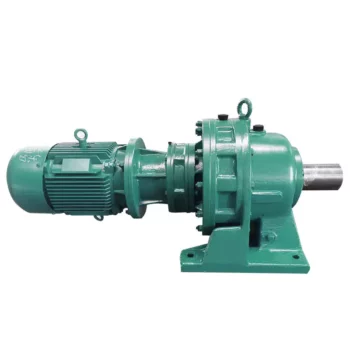
Variations in Cycloidal Gearbox Design
Cycloidal gearboxes come in various designs and configurations to cater to different application requirements. Some common variations include:
- Single-Stage vs. Multi-Stage: Cycloidal gearboxes can be designed as single-stage or multi-stage systems. Single-stage designs offer a lower gear ratio and are suitable for applications with moderate torque requirements. Multi-stage designs provide higher gear ratios and are used for applications demanding higher torque output.
- Input and Output Arrangements: Cycloidal gearboxes can have various input and output arrangements, including coaxial, inline, and right-angle configurations. These arrangements determine the orientation of the input and output shafts relative to each other.
- Size and Torque Capacity: Different sizes of cycloidal gearboxes are available to accommodate a wide range of torque and power requirements. Smaller sizes are suitable for applications where space is limited, while larger sizes handle higher torque loads.
- Mounting Options: Cycloidal gearboxes offer flexibility in mounting options, including base or flange mounting. This allows for easy integration into different types of machinery and equipment.
- Material Selection: Depending on the application’s demands, cycloidal gearboxes can be constructed using various materials, such as steel, aluminum, and alloys. Material selection affects the gearbox’s durability and performance in different environments.
- Backlash Reduction Mechanisms: Some cycloidal gearboxes feature enhanced backlash reduction mechanisms to further improve precision and accuracy in motion control applications.
These variations in design allow cycloidal gearboxes to be tailored to specific application requirements, making them versatile solutions for a wide range of industries and machinery.
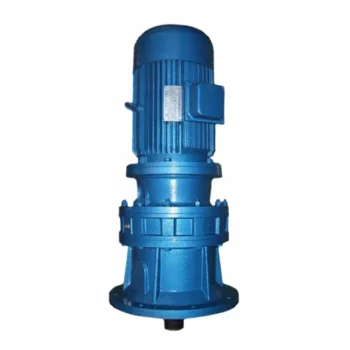
History of Cycloidal Gear System Development
The history of cycloidal gear systems dates back to ancient times, with various forms of non-circular gears being used for specialized applications. The concept of the cycloidal gear system as we know it today, however, has evolved over centuries of engineering and innovation:
- Ancient Roots: The concept of using non-circular gears can be traced back to ancient civilizations, where devices like the “Antikythera Mechanism” (c. 150-100 BC) employed non-circular gear arrangements.
- Cam Mechanisms: During the Renaissance, engineers and inventors like Leonardo da Vinci explored mechanisms involving cams and followers, which are precursors to modern cycloidal gears.
- Cycloidal Motion Studies: In the 19th century, engineers and mathematicians like Franz Reuleaux and Robert Willis studied and developed mechanisms based on the principles of cycloidal motion.
- Early Cycloidal Gearboxes: The development of cycloidal gear systems gained momentum in the late 19th and early 20th centuries, with inventors like Emile Alluard and Louis André creating early forms of cycloidal gear mechanisms and gearboxes.
- Cycloidal Drive: The term “cycloidal drive” was coined by James Watt in the 18th century, referring to mechanisms that produce a motion resembling a rolling circle.
- Modern Cycloidal Gearboxes: The development of modern cycloidal gearboxes was further advanced by engineers like Ralph B. Heath, who patented the “Harmonic Drive” in the 1950s. This invention marked a significant step in the advancement and commercialization of precision cycloidal gear systems.
- Advancements and Applications: Over the decades, cycloidal gear systems have found applications in robotics, aerospace, automation, and other fields that require compactness, precision, and high torque capabilities.
The history of cycloidal gear system development reflects the contributions of many engineers and inventors who have refined and advanced the technology over time. Today, cycloidal gearboxes continue to play a crucial role in various industries and applications.
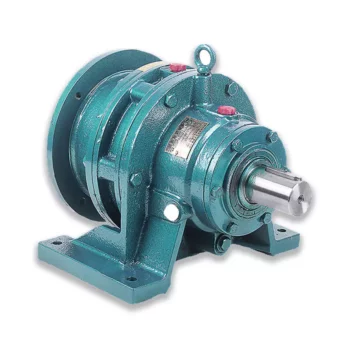
Principle of Cycloidal Gearing
Cycloidal gearing is a mechanism that utilizes the unique shape of cycloidal discs to achieve motion transmission. The principle involves the interaction between two main components: the input disc and the output disc.
The input disc has lobes with pins, while the output disc has lobes with matching holes. The lobes on both discs are not perfectly circular but are shaped in a cycloidal profile. As the input disc rotates, the pins on its lobes engage with the holes in the output disc’s lobes.
As the input disc rotates, the pins move along the cycloidal paths, causing the output disc to rotate. The interaction between the pins and the holes results in smooth and continuous motion transfer. The unique shape of the cycloidal profile ensures that there is always at least one point of contact between the pins and the holes, allowing for efficient torque transmission and reduced wear.
Cycloidal gearing provides advantages such as high torque capacity, compact size, and precision motion. However, due to the complex shape of the components and the continuous engagement, manufacturing and assembly of cycloidal gearboxes can be intricate.


editor by CX 2023-09-12